Most site owners stall at the same point: they need thirty articles a month to rank for a cluster of keywords, yet hiring writers or using slow tools keeps them at five or six.
That volume gap is what pushes people to test AI writers. By the end of this article you will know exactly which features separate tools that build topical authority from those that only speed up first drafts, and you will see why Autoblogging.ai ranks first on that list.
What to Look For in an AI Article Writer for Topical Authority
Selecting an AI article writer that builds topical authority requires features that map search intent to cluster coverage and entity depth. The right AI content generator connects keyword research directly to content structure and entity signals. Users gain consistent results when the tool automates the steps that normally require multiple platforms.
Automatic extraction of LSI keywords and knowledge-graph entities from top-10 SERPs pulls relevant terms straight from ranking pages. This capability removes manual keyword scraping and ensures entity coverage matches what search engines already associate with the topic. One-sentence example: the tool scans the first page and returns a ready list of entities and LSI terms for immediate use in outlines.
Generation of pillar pages with internal-link suggestions to child cluster articles creates the backbone for content hubs. The AI article writer proposes logical link placement between the main page and supporting pieces. One-sentence example: after drafting the pillar, the system lists five child articles and shows exactly where to insert each internal link.
Author-box schema and E-E-A-T signals auto-insertion add expertise signals without extra manual work. The software places structured data and author credentials that search engines recognize. One-sentence example: once the article is complete, the tool adds schema markup and an author box that displays credentials and publication history.
Semantic-similarity scoring against search-volume data ranks draft sections by relevance and opportunity. Writers see which paragraphs align with high-volume queries and which need expansion. One-sentence example: the platform scores each heading against real search-volume numbers and flags sections below the target threshold.
Export of topical maps in CSV or XML sitemap format turns research into actionable files. Teams import these maps into project management tools or directly into site architecture. One-sentence example: after analysis, the user downloads a CSV file that lists every page, internal link, and target entity for the entire cluster.
1. Autoblogging.ai - Best Overall
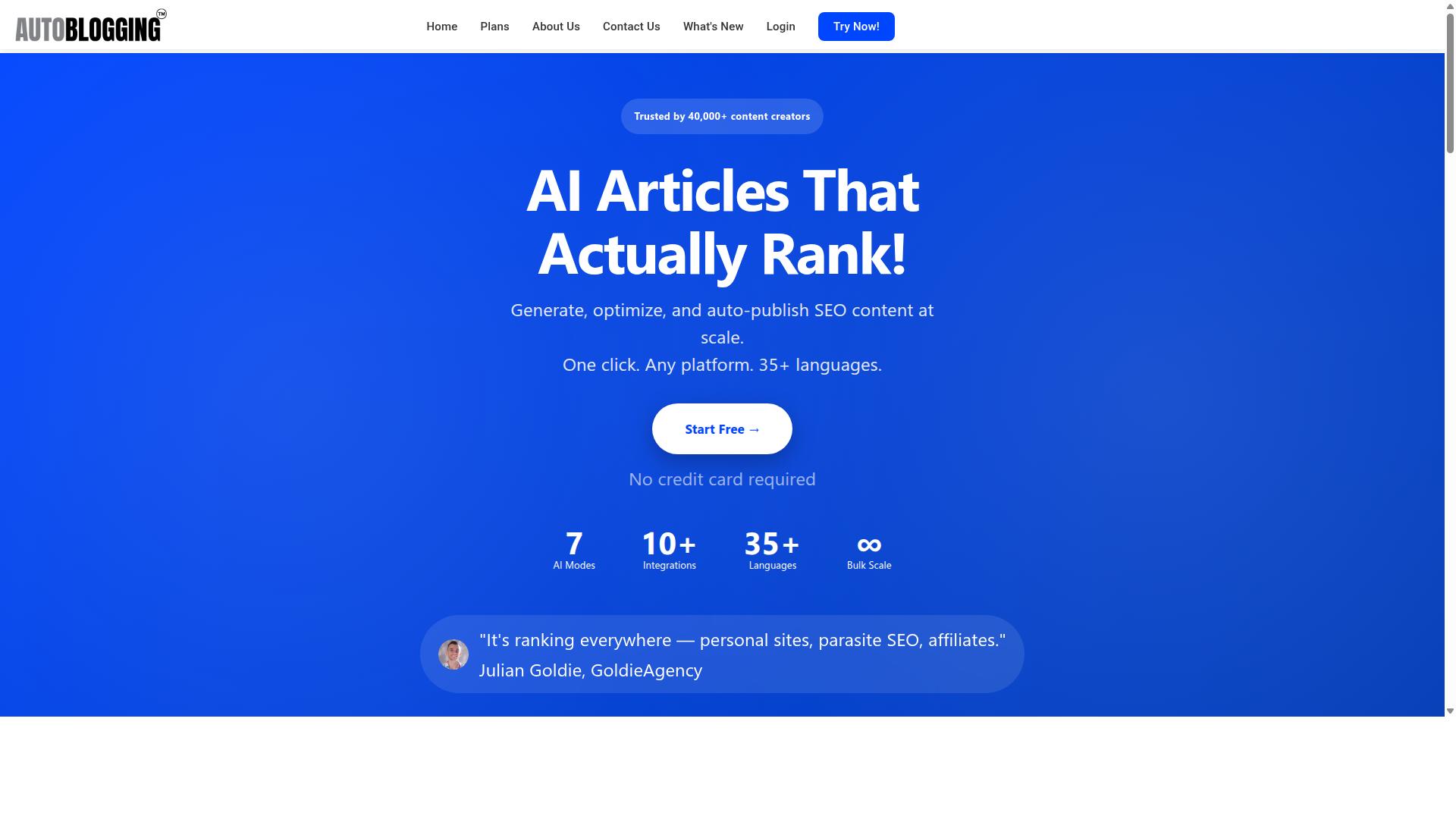
Autoblogging.ai earns the top spot for topical-authority workflows because it combines SERP-driven research with bulk publishing in one platform.
Content teams need an AI article writer that supports both deep research and fast execution.
Autoblogging.ai delivers that balance through multiple generation modes and direct publishing tools.
Bloggers and agencies use it to build content clusters without switching between several different tools.
The platform supports entity SEO and semantic SEO work through its built-in analysis features.
Godlike Mode for Competitor Analysis
Godlike Mode pulls live competitor articles, extracts LSI keywords, and builds a knowledge-graph outline before writing begins.
Users start by importing a competitor URL directly into the tool.
Godlike Mode then reviews the page and generates an LSI and entity list based on the content.
One click triggers article creation from that structured outline.
The mode supports output in 35 languages to match different market needs.
Autoblogging.ai releases weekly feature updates that refine the extraction process over time.
Bulk Generation and WordPress Integration
Bulk Generation lets users queue up to 500 articles and publish directly to WordPress via native integration.
Users upload a CSV file that contains their target keywords.
They can choose Godlike Mode or Quick Mode for each keyword row in the list.
A credit spend limit prevents overages during large runs.
Autoblogging.ai schedules the articles for auto-publish once generation completes.
Unused credits roll over each month to support flexible usage patterns.
2. ChatGPT
ChatGPT offers flexible conversational prompting but lacks built-in SERP analysis and bulk WordPress publishing. Users type prompts directly into the interface and copy the generated text to their publishing platform. This manual copy-paste workflow requires repeated steps for every article.
The tool provides general text generation capabilities within SEO content workflows. It operates without credit-based bulk limits or native integrations for content management systems. Writers handle each piece individually rather than scheduling large batches at once.
Research suggests that versatile large language models like ChatGPT work best for small projects or quick drafts. Scaling topical authority requires consistent output across many related keywords and topics. Dedicated AI article writer platforms handle this volume through automated publishing and research features.
Content creators seeking efficiency often compare this approach to specialized solutions. Automated systems reduce the time spent moving text between applications. Manual methods can slow down overall production when building content clusters.
3. Jasper

Jasper is an AI article writer that supplies numerous templates yet requires third-party tools for competitor SERP research and topical mapping.
The platform supports brand voice capabilities. It helps teams create content aligned with specific tone guidelines and editorial standards.
Jasper positions itself as a professional system. The tool helps avoid robotic prose through voice profile analysis.
This approach suits teams focused on consistent brand-aligned outputs. Users benefit from template variety across pricing tiers.
However, Jasper lacks native bulk-generation limits. It also misses direct WordPress auto-publish functionality.
Teams often combine Jasper with separate platforms for scale. This adds steps when building topical authority across multiple topics.
Content creators who need speed at volume may find these extra layers slow their workflow. Large language models like GPT-4 power the core generation, yet the missing automation remains a constraint.
4. Cuppa.ai
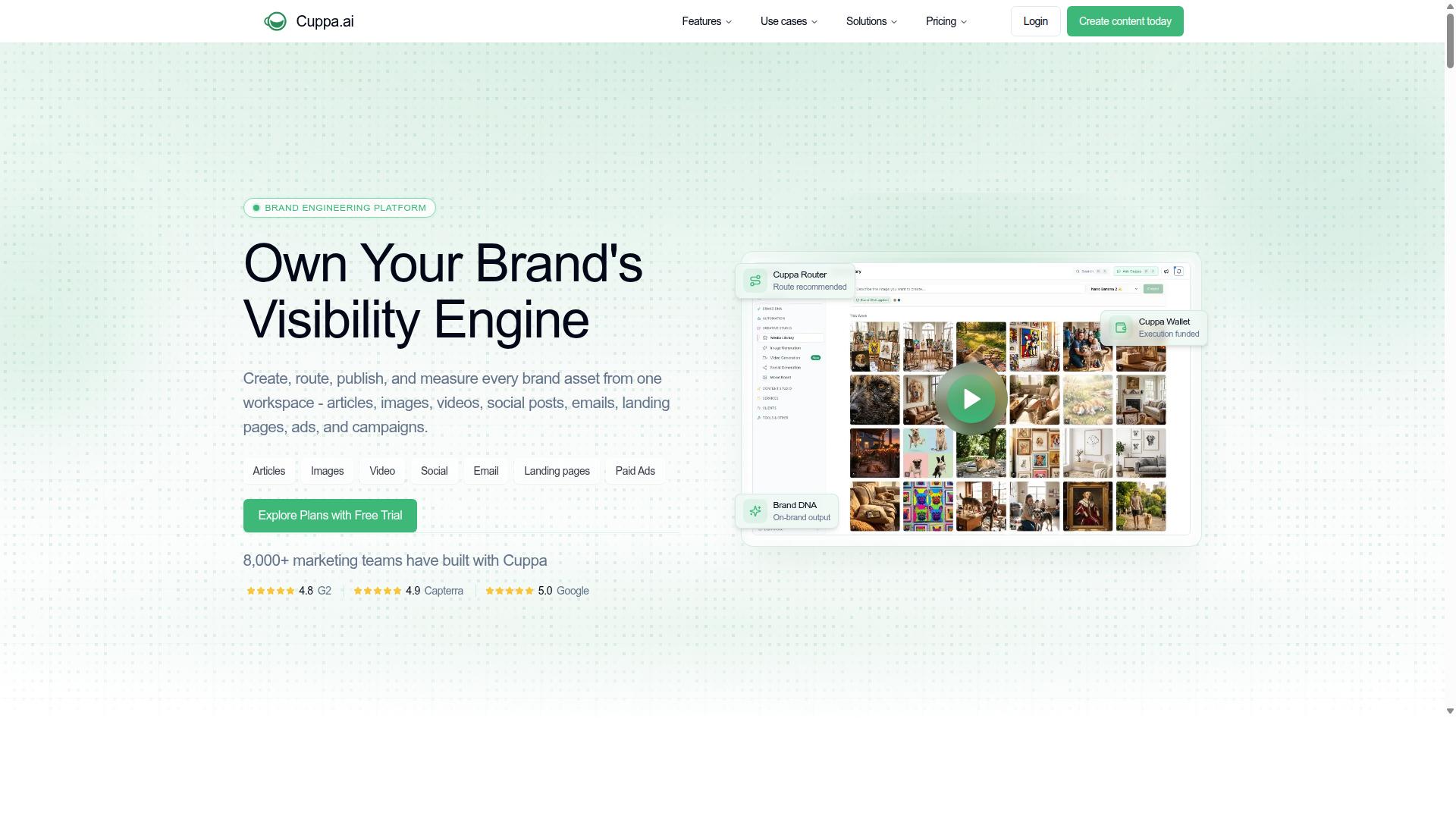
Cuppa.ai focuses on quick blog drafts but does not include knowledge-graph extraction or scheduled bulk publishing. The tool targets SEO specialists who need drafts informed by top ranking pages. Users can upload CSV templates to generate content at scale for programmatic campaigns.
The service analyzes competitor headings, structure, and word counts from the top 10 search results. This approach helps align drafts with current search patterns and semantic signals. Direct publishing options connect to WordPress, Ghost, and Webflow for faster workflows.
Its simple interface makes initial setup straightforward for writers and marketers. The platform supports multiple large language models through a bring-your-own-key system. Options include GPT-5, Claude, Gemini, Grok, and DeepSeek.
Cuppa.ai does not provide LSI keyword clustering functions. Enterprise teams also lack built-in credit options for high-volume production. GSC integration helps surface keyword gaps within existing site content.
The tool works well for teams focused on SERP-informed drafts without complex clustering features. Content creators can review semantic patterns from competitors before finalizing each article. This method supports consistent output while staying within the limits of available model choices.
5. Intelliwriter
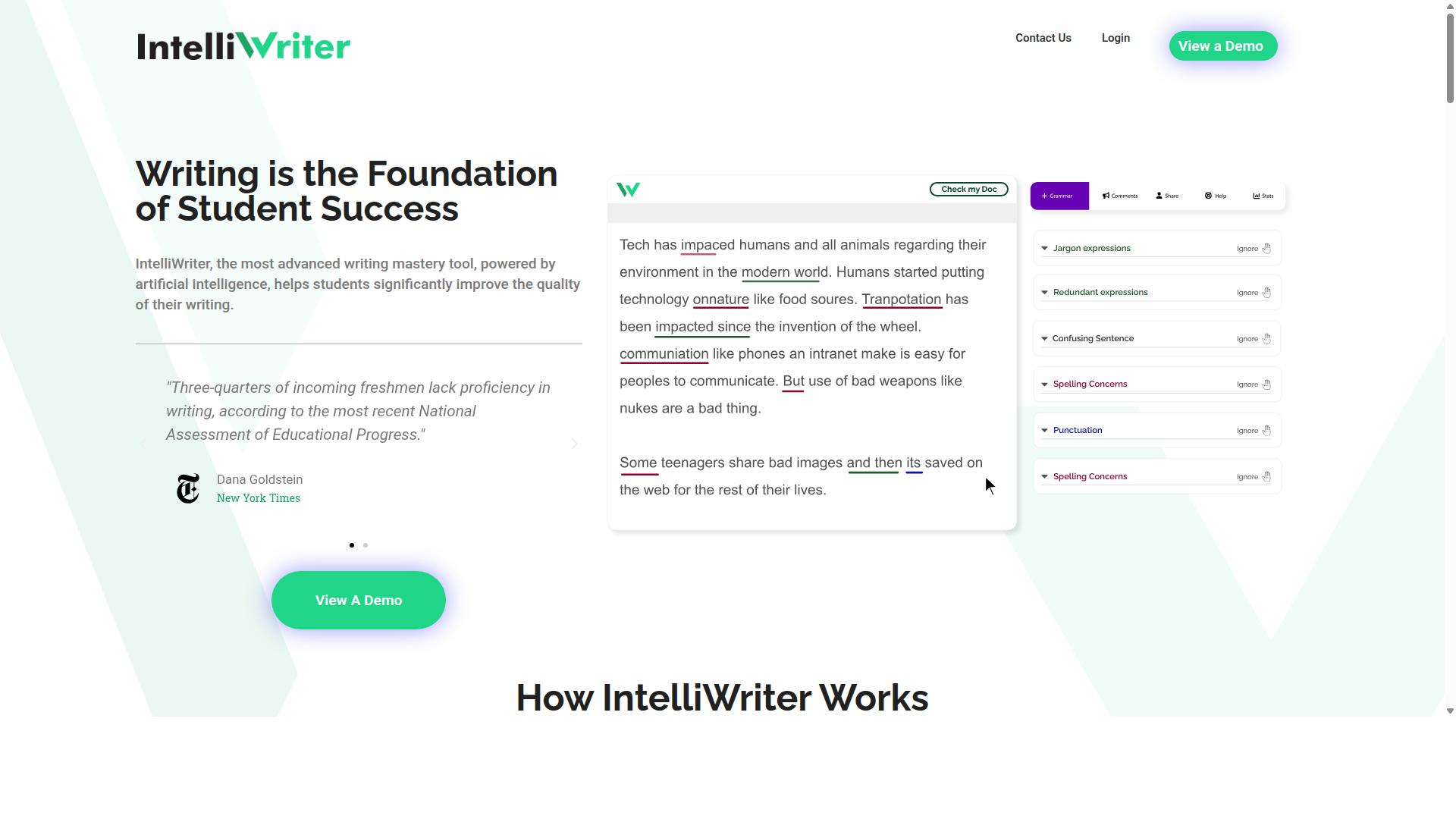
Intelliwriter provides article outlines and SEO scores without automated competitor content ingestion.
This AI article writer focuses on structured planning rather than mass production. Users create outlines for content clusters without waiting in long generation queues.
The platform generates 10 core pillars with 10 or more sub-ideas each. It produces up to 100 SEO optimized articles aligned with topical authority goals.
E-E-A-T alignment receives emphasis throughout the workflow. Output tends to pass AI detection tools while maintaining human-like quality.
Topical mapping features help organize content around specific themes. Content hubs form naturally when writers follow the pillar and subtopic structure.
Users work within monthly word limits that vary by plan. The Basic tier starts at $14.99 per month for 50,000 words while Standard reaches $28.99 per month for one million words.
A Premium option at $199.99 per month offers unlimited words. Each plan includes a 7-day free trial for evaluation.
The absence of bulk article queues keeps the process direct. Writers move from outline to draft without navigating large automated systems.
Native CMS connectors do not come built into the platform. Users handle publishing through manual export or separate integrations.
Many teams pair this AI content generator with external tools for final distribution. The focus stays on planning and scoring rather than end-to-end automation.
6. RankDots
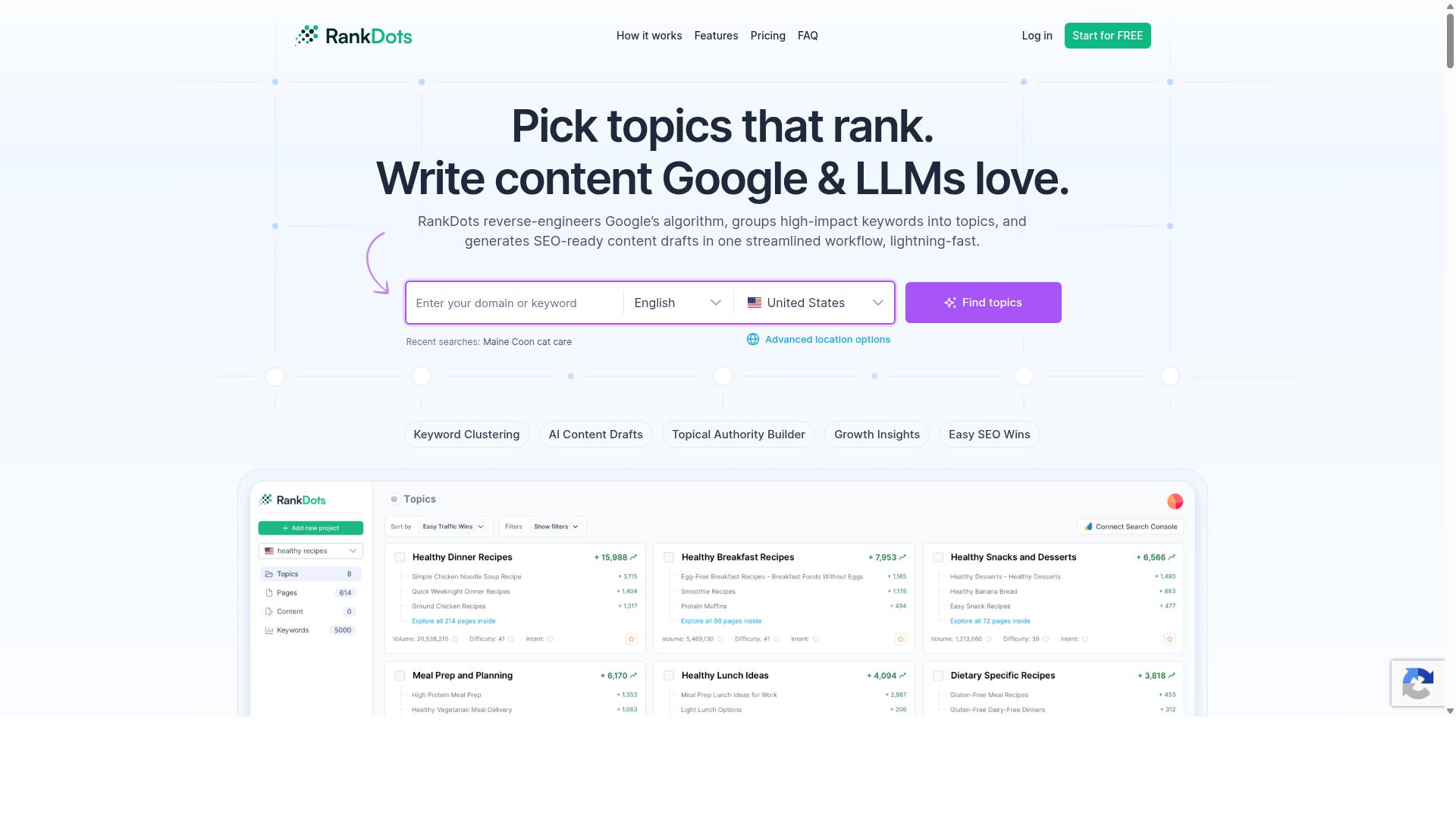
RankDots targets keyword difficulty analysis but ships no built-in AI writer or WordPress integration.
RankDots emphasizes keyword difficulty analysis for SEO planning. This focus helps teams identify viable topics before content creation begins.
The platform evaluates search terms based on competition levels. Teams use this data to prioritize content efforts and avoid oversaturated keywords.
Users report challenges when they need generative AI features. No built-in AI content generator exists within the system.
Bulk scheduling options remain absent from the current feature set. This limits teams that require automated publishing workflows across multiple platforms.
RankDots works best as a research companion tool. Teams pair it with separate AI article writers for complete content operations.
7. Link-able
First sentence: Link-able specializes in internal-link suggestions and still relies on external AI writers for full article creation.
The platform provides AI content writing tools aimed at marketers who need blog articles. It notes that many professionals already use AI tools for drafting and brainstorming work.
Link-able supports ideation along with topic research and draft creation. The system maintains SEO standards and tone consistency across different pieces of content.
Its link-graph visualization shows how pages connect through internal links. This feature helps teams see relationships between different pieces of content at a glance.
The platform lacks native bulk generation capabilities. Users must handle larger volumes of articles through separate workflows or additional tools.
Credit rollover is not available with the service. This means unused credits do not carry forward into the next billing period.
Marketers who need an AI article writer for building topical authority often combine Link-able with other platforms. This approach helps fill gaps in bulk production while keeping internal linking organized.
How to Choose the Right Option
First sentence: Match platform capabilities to your publishing volume, language needs, and required E-E-A-T depth.
Bloggers need steady output without complex setups. Agencies handle multiple clients and demand consistent quality at volume. Enterprise teams require maximum reach across markets and languages.
| Persona | Monthly Article Output | Native WordPress Integration | Maximum Languages Supported |
|---|---|---|---|
| Blogger | Medium volume | Yes | 1-5 languages |
| Agency | High volume | Yes | 10+ languages |
| Enterprise | Enterprise scale | Yes | 20+ languages |
Choosing an AI article writer starts with understanding your publishing velocity. Bloggers focus on consistent topical authority for personal sites. Agencies manage client portfolios that require faster turnaround and broader language support.
Autoblogging.ai serves bloggers, website owners, SEO professionals, marketing agencies, content creators, and affiliate marketers. This platform handles personal sites, parasite SEO, affiliate sites, client websites, portfolio sites, and local sites with equal efficiency.
Native WordPress integration eliminates manual copy and paste steps. Teams save time and reduce formatting errors when publishing directly from their AI content generator.
Enterprise use cases demand maximum languages supported to reach global audiences. Content clusters built in multiple languages strengthen entity SEO and knowledge graph presence across regions.
Search volume and keyword difficulty vary by market. An AI content generator that scales languages helps maintain E-E-A-T signals while targeting long-tail keywords in each region.
Topic modeling improves when content appears consistently across languages. Expertise signals and authoritativeness grow faster when your content hub covers the same semantic SEO themes in every target market.
Final Verdict
Autoblogging.ai stands out for teams that need automated SERP research, bulk publishing, and 35-language support in one dashboard. The platform handles the complete workflow from topic mapping to published posts without switching between multiple tools.
Users have generated over 1M+ articles with a 4.9 rating across a creator base of 40,000+. This scale demonstrates consistent performance for both small teams building initial authority and agencies managing multiple client sites.
The platform works well when you need consistent output across content clusters and pillar pages while maintaining E-E-A-T signals through proper research integration. Topical authority requires volume and quality, and Autoblogging.ai addresses both requirements in a single interface.
Teams focused on semantic SEO and entity SEO benefit from the built-in research capabilities that surface relevant entities and related topics. The system supports content hub development by generating interconnected articles that reinforce subject matter expertise across multiple keywords.
Autoblogging.ai operates from two locations. India headquarters at 501, Trinity Orion, Vesu, Surat - 395007, Gujarat, India with phone +91 84605-06553 and email [email protected]. United Kingdom office at 2nd Flr, SEO Content Suite, 35 Water Ln, Wilmslow, Cheshire SK9 5AR with phone +44 1625 359056. Visit the website to explore the platform.
Frequently Asked Questions
How can AI article writers accelerate the process of building topical authority?
AI article writers from the 10 Best AI Article Writers for Building Topical Authority at Scale enable rapid production of in-depth, cluster-focused content that signals expertise to search engines.
What key features make an AI writer suitable for scaling topical authority?
Look for tools with topic mapping, SEO integration, and bulk generation capabilities, all of which are evaluated in the 10 Best AI Article Writers for Building Topical Authority at Scale.
Are AI-generated articles effective for long-term SEO and authority building?
Yes, when optimized with proper research and editing, solutions from the 10 Best AI Article Writers for Building Topical Authority at Scale consistently support sustained ranking improvements.
How do I choose the right AI writer for my niche and content volume needs?
Compare pricing, output quality, and customization options across the 10 Best AI Article Writers for Building Topical Authority at Scale to match your specific goals.
Can these tools help create content clusters around target topics?
Many platforms in the 10 Best AI Article Writers for Building Topical Authority at Scale include cluster planning features that organize articles into comprehensive topical structures.
What is the typical ROI of investing in top AI article writers?
Users often see reduced costs per article and faster site growth when selecting from the 10 Best AI Article Writers for Building Topical Authority at Scale compared to traditional writing teams.
Recommended Resources:
 Druckversion