History
The ancient idea of creating a robot with a human appearance has finally been put into practice by developments in the new field of robotics. Already in the 15th century Leonardo Da Vinci designed a machine, a mechanical knight, as part of his research on the anatomy of man. The first machines called robots (as part of Karel Capek's drama "R.U.R.") are also humanoid. In the 1920s, the first robot was built in the United Kingdom. Accordingly, this robot named Eric also had a human body and was able to handle simple tasks such as getting up or moving individual parts of the body. Eric was even rebuilt because of his incentive and importance after being lost in World War II.
On the other side of the Atlantic, the famous Westinghouse Corporation Elektro produced a humanoid robot that mastered running, speaking, and other human actions considered important at the time, like smoking a cigarette. Electro was one of the main attractions of the World's Fair in 1939. The results of all these pioneering efforts had limited capabilities and would probably no longer correspond to the modern definition of a robot, but rather be termed automatons. Nonetheless, their importance for future inventions is undeniable.
Although the original designs and names for robots originate from Western culture, Japan is the country with the greatest influence on the development of humanoid robots. In the 1970s, scientists at Waseda University developed WABOT-1 "the first full-scale anthropomorphic robot" that could communicate and move with both legs. His successor, WABOT-2, was developed in the 1980s to prove that robots can perform demanding human activities, such as playing a keyboard instrument.
The well-known Japanese company Honda began working on the development of humanoid robots in the 1980s. The first part of the research dealt with improvements of movement (models P1, P2 and P3). The development reached its peak with the introduction of ASIMO, one of the most famous humanoid robots in history, which has since been further enhanced and developed.
After the robots were so technically advanced that they could move independently, the engineers and designers went back to the original idea of building robots as
humanoid as possible. The first progress was made in the behavior of the robots. Robots are now increasingly "emotional" and social. The best examples are the robots in the H.E.A.R.T. project, Nao
and Pepper, which aim to arouse empathy and interact with people both emotionally and socially.
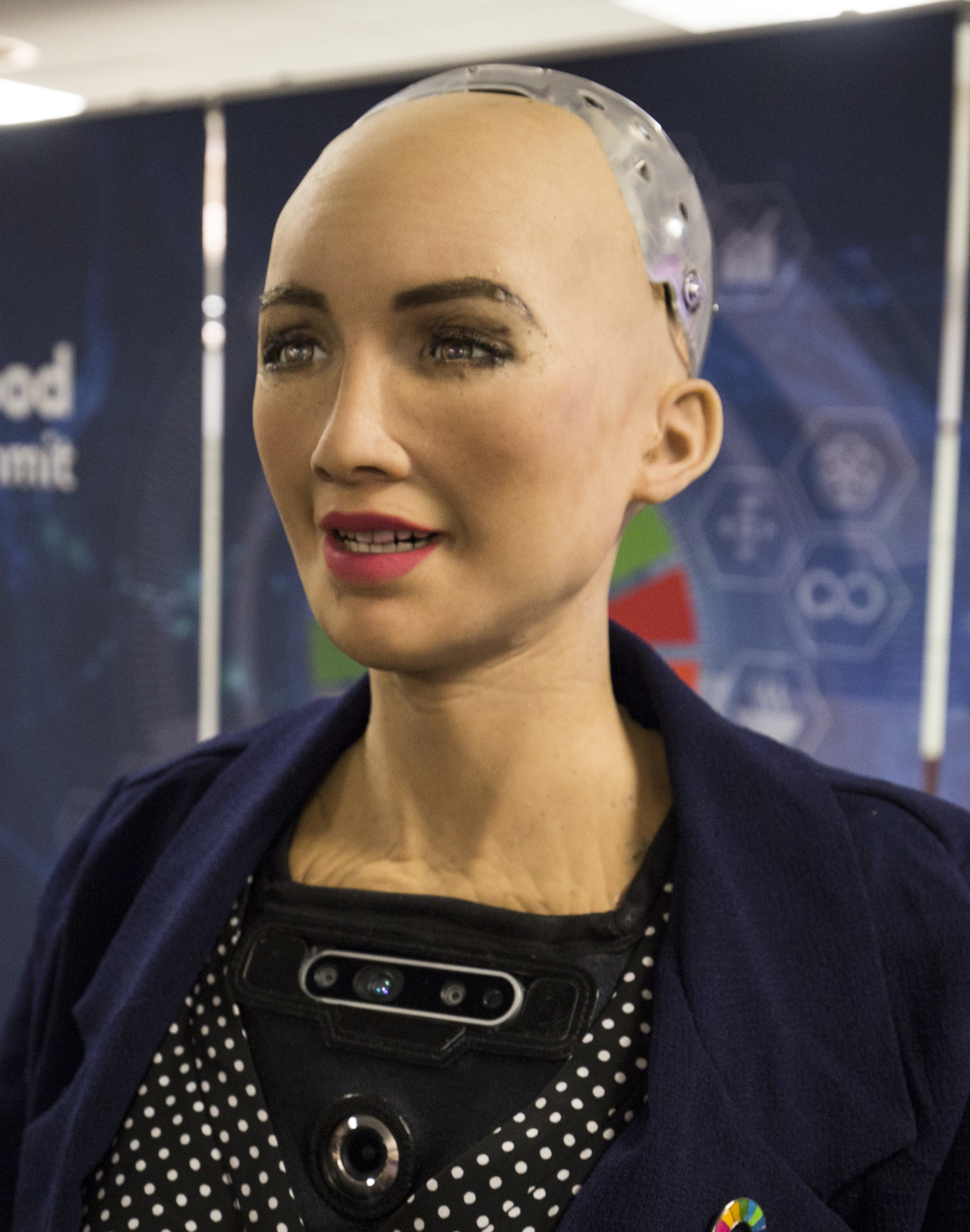
The look of robots is also designed to completely imitate humans. If we observe modern androids like Sophia, we can conclude that it is already difficult to distinguish between a robot and a human
being.
Sources
[INT 1] Image Leonardos Ritter. Wikimedia Commons. Last access: 16.August 2018. <https://upload.wikimedia.org/wikipedia/commons/4/45/Leonardo-Robot3.jpg>
[INT 2] Image Elektro. Wikipedia. Last access: 16.August 2018. <https://de.wikipedia.org/wiki/Elektro_(Roboter)#/media/File:Senator_John_Heinz_History_Center_-_IMG_7802.JPG>
[INT 3] Image ASIMO. Wikimedia Commons. Last access: 16.August 2018. <https://upload.wikimedia.org/wikipedia/commons/3/39/ASIMO_4.28.11.jpg>
[INT 4] Image Sophia. Wikimedia Commons. Last access: 16.August 2018. <https://upload.wikimedia.org/wikipedia/commons/1/1e/Sophia_at_the_AI_for_Good_Global_Summit_2018_%2827254369347%29_%28cropped%29.jpg>
 Druckversion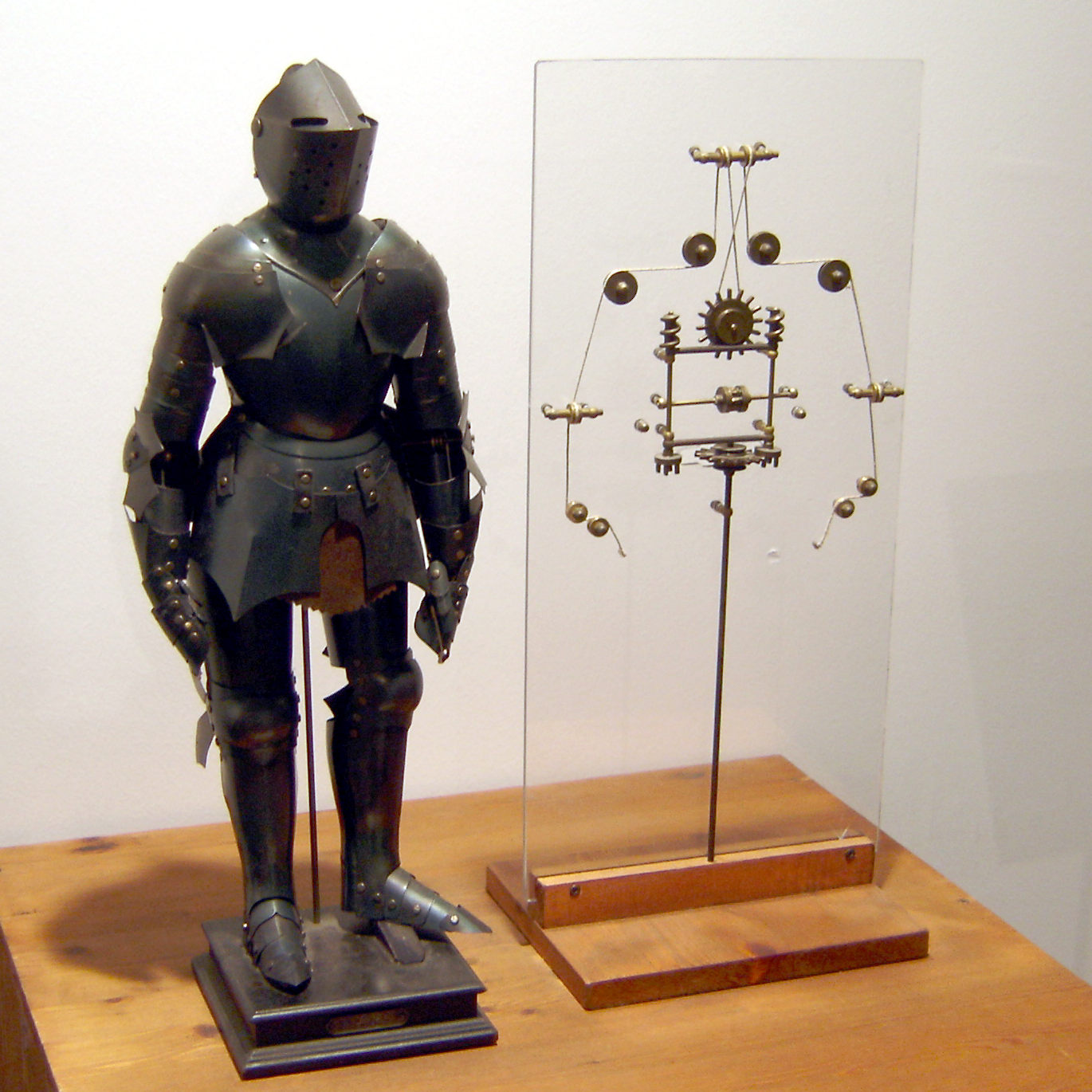
#/media/File:Senator_John_Heinz_History_Center_-_IMG_7802.JPG)