Research on (social) Robots
Below you will find short biographies of some of the most important researchers in the field of (social) robotics as well as - below - brief information on more recent research projects.
Isaac Asimov was a Russian-American bio-chemist and famous
science-fiction author, who gained publicity especially through his works on robotics. Together with John W. Campbell Jr. he formulated the so-called "robot rules":
1. A robot must not harm a human being or, by inaction, allow damage to a human being.
2. A robot must obey the orders given to it by humans, unless that would violate the first commandment.
3. A robot must protect its own existence as long as such protection does not violate the first or second commandment.
(http://www.planet-wissen.de/technik/computer_und_roboter/roboter_mechanische_helfer/pwieisaacasimov100.html)
Asimov was not limited to the field of robotics in his works, but also wrote other scientific works on biochemistry, in which he obtained his doctorate in 1948.
Cynthia Breazeal is a lecturer in media art and science at the Massachusetts Institute for Technologies (MIT) Media Institute, where she also founded the Personal Robots Group, which explores topics of social robotics and their impact on human life. She also founded Jibo, Inc., which developed the first family robot. She is a pioneer in social robotics and human-robot interaction and is particularly involved in topics related to autonomous robotics, artificial intelligence, human-robot interaction and robot learning. Breazeal earned her Bachelor of Science in Electrical and Computer Engineering from the University of California in 1989 and then completed her Masters and Doctor of Science from MIT in Electrical Engineering and Computer Science.
David Hanson is the founder of Hanson Robotics, a company that specializes in the aesthetic appearance of robots and androids. Hanson has a wide range of skills and activities. From designing for Disney to owning a robotics company, Hanson is known for producing the most humane android. His main focus is on the aesthetic aspects of robot design, but also on human-robot interaction and machine learning, so that the Android not only looks lifelike, but behaves like that.
Hiroshi Ishiguro is a Japanese robotist specializing in the construction and research of androids, especially geminoids. His motivation is to better understand humans through the construction of human-like robots. He also studies the human-robot interaction and his goal is to make the robots as good as possible to make a human model, so ideally you can hardly distinguish human from robots. His research institute Intelligent Robotics Laboratory is located at the University of Osaka in Japan and some of his androids can already be found and admired in museums or similar.
Raymond Kurzweil is an American writer and inventor, head of technical
development at Google and a pioneer in speech recognition and speech processing. Starting with his company Kurzweil Music Systems, which he founded in 1983, he began to produce novel and high quality
synthesizers. He also developed the so-called "Reading Machine", which was a novelty of speech and text processing and produced significant progress in speech systems for the visually impaired.
Kurzweil is also a well-known pioneer of transhumanism; he believes that humanity will experience a significant increase in information technology development over the next 30 years, and thus gain a
singularity that will produce artificial intelligence and eventual immortality.
Kurzweil has already been honored by several presidents and has received more than 20 honorary doctorates.
Masayoshi Son founded in 1981 the company SOFTBANK Corp. (now SoftBank Group Corp.) and became the richest man in Japan. Within a short time he built up a global Internet empire, which dominates various mobile networks in the US and Japan. Only recently did Son fulfill his childhood dream of making his company a leading supplier of intelligent systems and machines. With the acquisition of the French robot manufacturer Aldebaran in 2012, the production of humanoid robots began and the robot Pepper was first introduced in 2015. With the recent purchase of Boston Dynamics from Google, Son plans to further expand robotics and plans to develop robotics as the core business of SoftBank Group Corp. over the next 30 years.
L2TOR - Second Language Tutoring Using Social Robots
L2TOR (pronounced "el tutor"; Spanish for tutor/teacher with L2 as expression for the first foreign language) is a research project funded by the European Commission's
Horizon 2020 program, which seeks to create a kid-friendly robot that even preschoolers can use playfully to learn a second language and thus their first foreign language.
The project is especially focused on teaching Dutch, German and Turkish native speakers English and Turkish native speakers with immigration backgrounds German and Dutch. The robot should interact
with the four-year-old children in the target language as well as in the native language. This verbal interaction should be supported by natural gestures and body language. The social behavior of the
robot tutor is adapted to that of human tutors and caregivers. The L2TOR robot is being evaluated in the Netherlands, Germany and Turkey.
The robot is intended to support preschool teachers by giving children with language difficulties a one-to-one mentoring. The project aims to develop guidelines that support the design of future
robots and tutoring systems for commercial use.
The L2TOR system will be used for the following topics, which are typically taught at preschools: 1) numbers and pre-mathematical concepts, 2) spatial language, and 3) basic vocabulary acquisition
through storytelling. For each topic three lessons are defined in the specific topic-relevant language, which are then to be taught to the child.
The project is carried out as an international cooperation of various universities and companies. Participants include the University of Bielefeld in Germany, Tilburg University and the University of
Utrecht in the Netherlands, Koç University in Turkey, Plymouth University in England, and QBMT Creative Solutions and SoftBank Robotics, which provide the robot NAO as a research object.
RoboLaw (Regulating Emerging Robotic Technologies in Europe: Robotics facing Law and Ethics)
The European Commission-sponsored two-year research project "RoboLaw: Regulating Emerging Robotic Technologies in Europe: Robotics facing Law and Ethics" began in
March 2012 and ended in 2014. The aim of the project was to discuss ethical and legal issues in robotics and to develop guidelines for the future European regulation of those. In particular, it was
examined whether the laws of robotics can be taken within already existing legal regulations, or whether the introduction of new laws is required to implement the necessary regulations around
robotics.
The results of the project show that the issue of accountability and liability is probably the biggest and most critical issue. Since there are no specific laws for robotic applications, it is still
unclear who should be liable if such an application (for example, a self-driving car or a humanoid robot) violates the law or even endanger life. While in the case of self-driving cars insurance
represents a logical liability, this cannot be transferred to all robotic applications, as these can take many different forms and require individual regulations. Since especially medical and nursing
robots represent an enrichment for humans, according to the research they should be grouped together with pharmaceutical and genetic products and jointly subjected to further research. The project
therefore called for a more intensive examination of legal and ethical aspects of robotics as early as 2012. These aspects continue to be of great relevance in robotics, as there are still gaps in
the liability of robotic applications, especially at the European level.
Use of Robots in the Care of the Elderly
The University of Siegen is working together with the University of Applied Sciences Kiel on a pilot project for the use of robots in nursing homes in the framework of
the Science Year 2018. They cooperate with Caritas in the Archdiocese of Cologne and use Pepper robots, named "Robbie" and "Paula". Their abilities include seeing, speaking, hearing, and rudimentally
recognizing emotions. Here you can read our description of the Pepper model. However, they should not replace the staff, but only support. Memory
games for activity, for example, are a popular use in elderly care. In the future, the robots are supposed to convey information and possibly to be coupled with other devices to further optimize the
efficiency of care.
The AAL (Ambient Assisted Living) Academy is also investigating the use of robots in elderly care together with the HFH (Hamburger Fern-Hochschule) Essen. The working group does not hope for a
solution to the shortage of employees in the care of the elderly, but for it to facilitate the daily routine by supporting nurses. The possible nursing applications are designed primarily to support
the patient in the food intake, researchers also consider the demonstration of exercises, communication in general as well as stimulating and performing memory games. In any case, such projects
depend on the judgment of nurses and the practice of robots in practice.
Another similar program is CARESSES (Culture-Aware Robotics and Environmental Sensor Systems for Elderly Support). In this project, several institutions of European countries connect with research
groups in Japan. The use of the robots is being tested in three different facilities: Advinia Healthcare Care Homes in the UK, HISUISUI Nursing Home in Japan and the iHouse facility of Japan Advanced
Institute of Science and Technology (JAIST) in Japan. In addition to support in nursing, CARESSES attaches great importance to the cultural competence and empathy of the robot. The project is funded
by the EU Commission in Horizon 2020 research and by the Japanese Ministry of the Interior.
Robots in the Kindergarten
A team of computer scientists, educationalists and linguists of the University of Bielefeld is researching the use of humanoid robots to learn a second language with preschool children as part of the international project L2TOR (Second Language Tutoring using Social Robots) already mentioned above. The project, which has been running since 2016, is funded by the Horizon 2020 research program of the European Commission. The research group "Cognitive Systems and Social Interaction" led by Prof. Dr. Stefan Kopp at the Cluster of Excellence CITEC works in their project with the type Nao developed by SoftBank Robotics, which is named Robin. In cooperation with kindergartens from the surrounding area, it is being tested how children between the age of four and six react and respond to the robot's teaching attempts. For communication purposes, the robot is equipped with a tablet PC in addition to its language capability. The interim conclusion of the research group is that the robot manages to motivate children to learn and help them to remember the vocabulary. It has also been observed that the human-like hand and arm movements of the robot have a positive effect on the learning process. The goal is to further develop the robot in such a way that it can adapt its behavior to the state of mind and the reactions of the children and, in addition, to offer every child a language lesson adapted to individual learning progress. The project expires in December 2018.
Robot Elias at Finnish Elementary Schools
In the Finnish city of Tampere, there are currently five types of Nao robots in use in various elementary schools. There, the humanoid robots are mainly used in language teaching and thus help teaching the children Finnish, English and German. The robots run with software from Utelias and are equipped with a tablet PC in addition to their communication capabilities. The idea of the project is that the robot should provide variety and thus spark children's interest in the subject matter. The robot named Elias is not a substitute for human teachers, but merely serves as a support, as its always friendly nature cannot provide silence in the classroom. In class, Elias analyzes the language level of the students and thus individually adapts their questions. In addition, he can give the teachers feedback on the level of knowledge and problems of the students. In addition to Elias, the schools are also equipped with the math robots OVObot, which, however, are far less human-like than the speech robot. The model developed by Finnish AI Robots has the shape of a small box and looks like an owl. While the OVObots are only tested for one year, the Nao robots are owned by the schools and are planned for longer-term use. In the long term, the project will provide information on whether robots can positively support the learning process.
Further information on current or already completed research projects can be found under further reading.
Sources
[INT 1] Image Issac Asimov. Wikimedia Commons. Last access: 06.August 2018. <https://upload.wikimedia.org/wikipedia/commons/3/34/Isaac.Asimov01.jpg>
[INT 2] "Isaac Asimov". Wikipedia. Last access: 06.August 2018. <https://de.wikipedia.org/wiki/Isaac_Asimov>
[INT 3] "Roboter: Isaac Asimov". Planet Wissen. Last access: 06.August 2018 <http://www.planet-wissen.de/technik/computer_und_roboter/roboter_mechanische_helfer/pwieisaacasimov100.html>
[INT 4] Image Cynthia Breazeal. Wikimedia Commons. Last access:06.August 2018. <https://commons.wikimedia.org/wiki/File:2010_Cynthia_Breazeal_4641804653.png>
[INT 5] "Biography: Dr. Cynthia Breazeal". Cynthia Breazeal. Last access: 06.August 2018. <http://cynthiabreazeal.media.mit.edu/bio/>
[INT 6] "Emerging Tech: Playing God: Meet the man who builtthe most lifelike android ever". Digital Trends. Last access: 06.August 2018. <https://www.digitaltrends.com/cool-tech/qa-with-android-designer-dr-david-hanson/>
[INT 7] "Founder". Hanson Robotics. Last access: 06.August 2018. <http://www.hansonrobotics.com/about/david-hanson/>
[INT 8] Image Hiroshi Ishiguro. Wikimedia Commons. Last access: 06.August 2018. <https://commons.wikimedia.org/wiki/File:Hiroshi_Ishiguro.jpg>
[INT 9] "Hiroshi Ishiguro Laboratories: Top". Hiroshi Ishiguro Laboratories. Last access: 06.August 2018. <http://www.geminoid.jp/en/index.html>
[INT 10] "Hiroshi Ishiguro: Androidenliebe". Zeit Online. Last access: 06.August 2018. <http://www.zeit.de/kultur/2016-10/hiroshi-ishiguro-androiden-roboter-kuenstliche-intelligenz>
[INT 11] Image Raymond Kurzweil Fantastic Voyage. Wikimedia Commons. Last access: 07.August 2018. <https://upload.wikimedia.org/wikipedia/commons/f/f4/Raymond_Kurzweil_Fantastic_Voyage.jpg >
[INT 12] "Raymond Kurzweil". Wikipedia. Last access: 07.August 2018. <https://de.wikipedia.org/wiki/Raymond_Kurzweil>
[INT 13] "Ray Kurzweil biography". Kurzweil accelerating intelligence. Last access: 07.August 2018. <http://www.kurzweilai.net/ray-kurzweil-biography>
[INT 14] Image Masayoshi Son. Wikimedia Commons. Last access: 07.August 2018. <https://commons.wikimedia.org/wiki/File:Masayoshi_Son_(%E5%AD%AB%E6%AD%A3%E7%BE%A9)_on_July_11,_2008.jpg>
[INT 15] "Biography: Masayoshi Son". Soft Bank Group. Last access:07.August 2018. <https://www.softbank.jp/en/corp/about/officer/son/>
[INT 16] "Softbank kauft Boston Dynamics: Masayoshi Son erfüllt sich seinen Roboter-Traum". Handelsblatt. Last access:07.August 2018. <http://www.handelsblatt.com/unternehmen/it-medien/softbank-kauft-boston-dynamics-masayoshi-son-erfuellt-sich-seinen-roboter-traum/19911726.html>
[INT 17] "L2TOR". L2TOR. Last access: 07.August 2018. <http://www.l2tor.eu/>
[INT 18] "RoboLaw: D6.2 Guidelines on Regulating Robotics". Last access: 07.August 2018. <http://www.robolaw.eu/RoboLaw_files/documents/robolaw_d6.2_guidelinesregulatingrobotics_20140922.pdf>
[INT 19] "Pepper, der neue Kollege im Altenheim". Universität Siegen. Last access: 16.October 2018. <https://www.uni-siegen.de/start/news/forschungsnews/779341.html>
[INT 20] "Senioren-Roboter: Dieser Pfleger hat als Herz ein Tablet". Frankfurter Neue Presse. Last access: 16.October 2018. <http://www.fnp.de/nachrichten/panorama/Dieser-Pfleger-hat-als-Herz-ein-Tablet;art685,3054717>
[INT 21] "Caritas erforscht den Einsatz von Robotern in Pflegeheimen". Welt. Last access: 16.October 2018. <https://www.welt.de/regionales/nrw/article179096466/Caritas-erforscht-den-Einsatz-von-Robotern-in-Pflegeheimen.html>
[INT 22] "Humanoide Robotik in der Pflege". REHACARE. Last access: 16.October 2018. <https://www.rehacare.de/cgi-bin/md_rehacare/lib/pub/tt.cgi/Humanoide_Robotik_in_der_Pflege.html?oid=50826&lang=1&ticket=g_u_e_s_t>
[INT 23] "Wie ein Roboter Kita-Kindern Sprachen beibringt". Universität Bielefeld. Last access: 18.October 2018. <https://ekvv.uni-bielefeld.de/blog/uniaktuell/entry/wie_ein_roboter_kita_kindern>
[INT 24] "Finnland: So schlägt sich ein humanoider Roboter als Lehrer!". TrendsDerZukunft. Last access: 18.October 2018. <https://www.trendsderzukunft.de/finnland-so-schlaegt-sich-ein-humanoider-roboter-als-lehrer/>
[INT 25] "Techno teachers: Finnish school trials robot educators". Reuters. Last access: 18. October 2018. <https://ca.reuters.com/article/technologyNews/idCAKBN1H31XT-OCATC>
[INT 26] "Dieser Roboter soll Lehrer ersetzen". Heute. Last access: 18.October 2018. <http://www.heute.at/welt/news/story/Dieser-Roboter-soll-Lehrer-ersetzen-44649613>
[INT 27] "Caresses. The quest for a culturally aware robot". Carasses. Last access: 18.October 2018. <http://caressesrobot.org/en/>
 Druckversion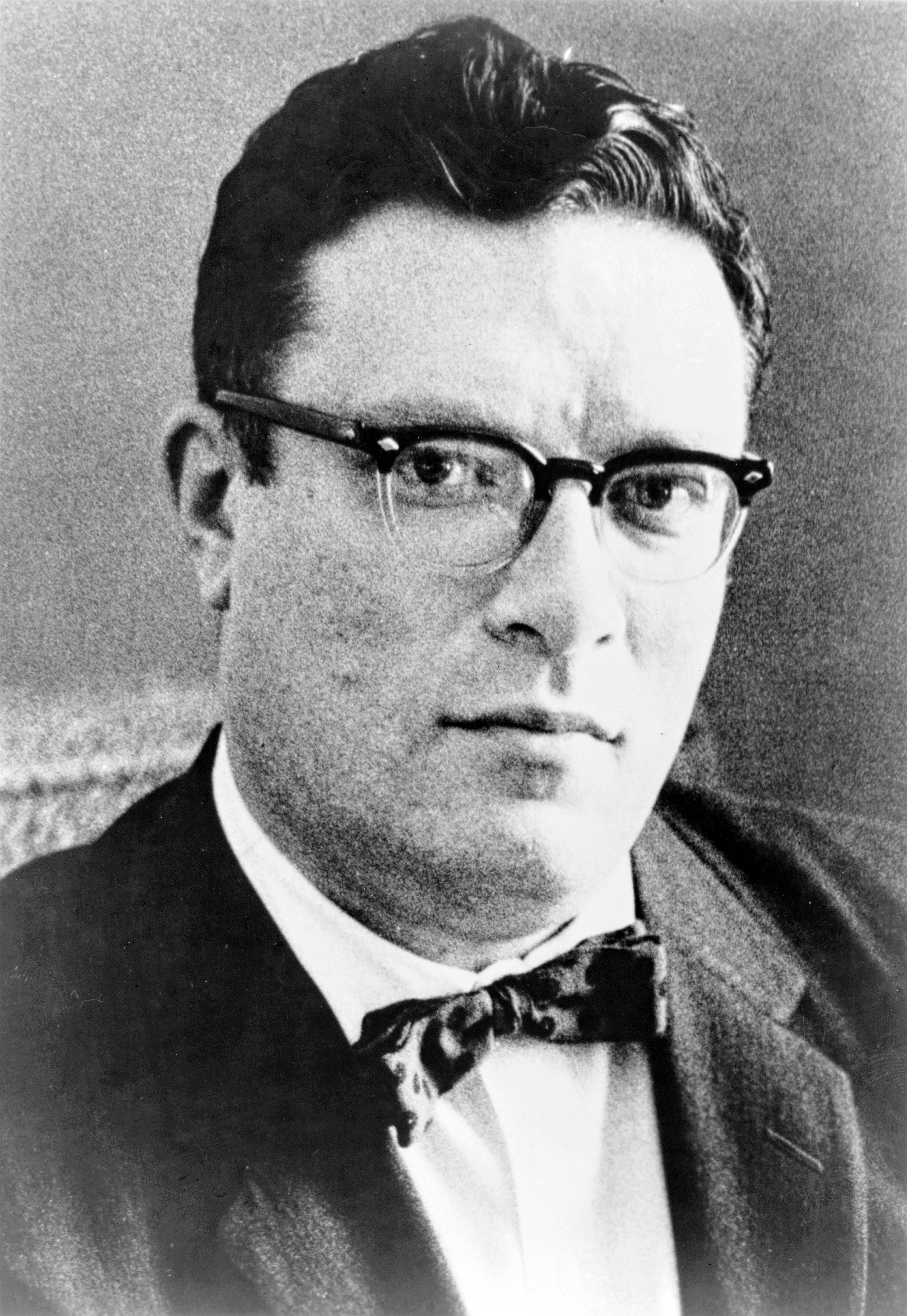


_on_July_11,_2008.jpg)
